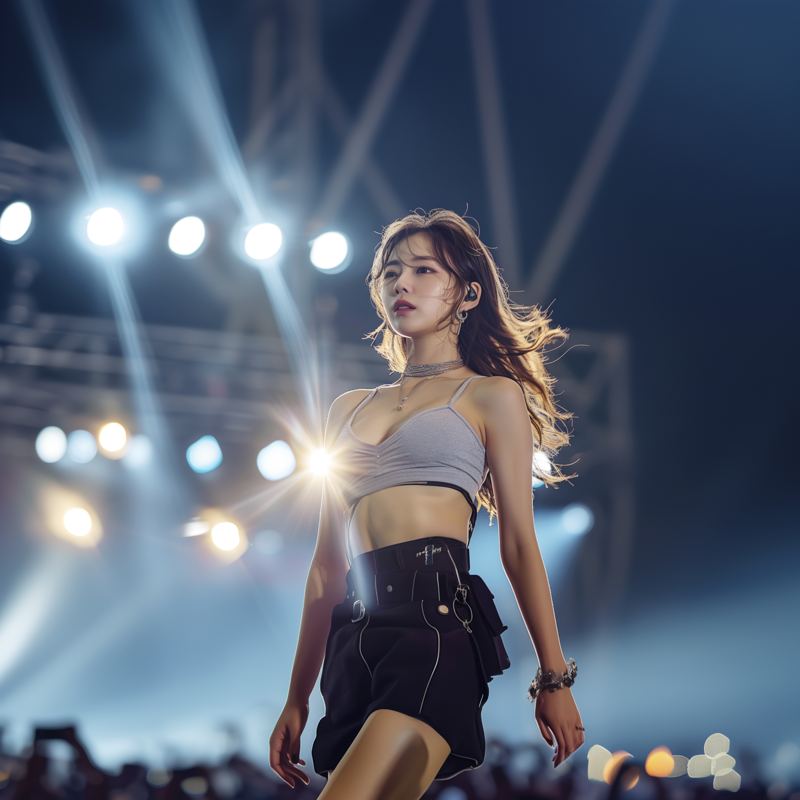
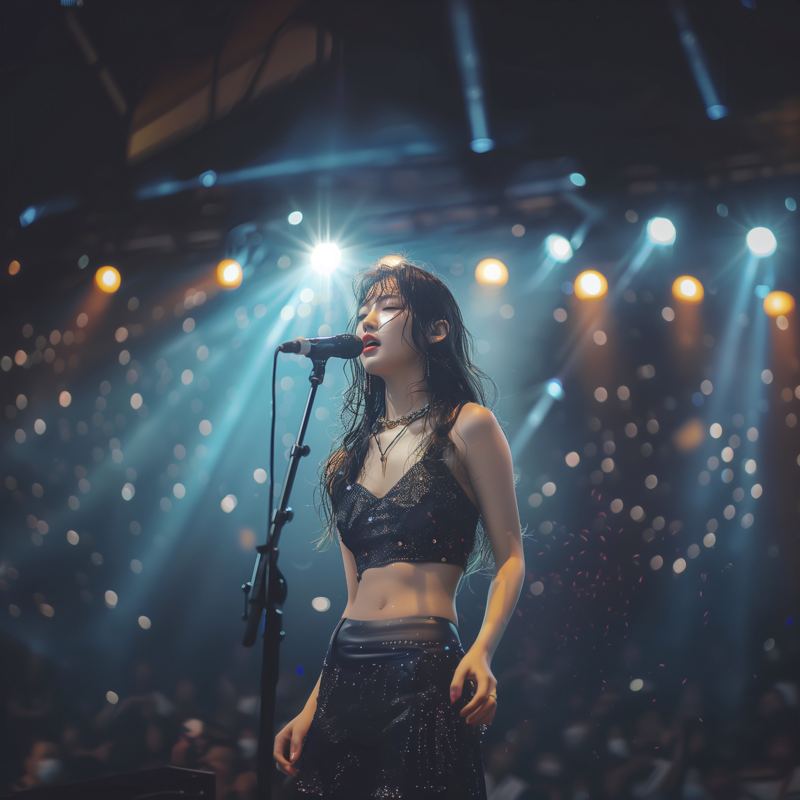
Illustrative image
Q&A
20 questionsCHECKED
Fact-checkedUPDATED
2026-11-1501How are K-pop songs usually structured?
Many K-pop songs are built from sections such as the intro, verse, pre-chorus, chorus, bridge and outro. Rap parts or dance breaks are often added. The order and length vary by song, and some tracks intentionally break the pattern to feel fresh. Knowing the structure helps you enjoy songs more deeply.
02What is a 'verse'?
A verse is the part of a song that tells the story, coming before the chorus. The first and second verses often share a melody but have different lyrics. In K-pop, several members commonly split the verse lines between them. Verses set up the mood and the situation the song describes, leading listeners toward the chorus.
03What is a 'pre-chorus'?
The pre-chorus sits between the verse and the chorus, building tension that leads into the chorus. Rising melodies or rhythm changes signal that the chorus is about to hit. In K-pop, pre-choruses are often short and memorable. Fans and producers sometimes just call it the 'pre' for short.
04Are the 'chorus' and the 'hook' the same?
The chorus is the main repeated section of a song, while a hook is a short, catchy phrase or sound that sticks in your head. Hooks often live inside the chorus, but the two aren't always the same thing. K-pop frequently repeats short hooks to make songs memorable, and a hook can also appear in the intro or bridge.
05What is a 'bridge'?
The bridge is a section near the end that shifts the song's mood, often right before the final chorus. Changes in melody or harmony build emotion. In K-pop, the bridge frequently features high notes or an emotional vocal part. It's a device that adds contrast so the song doesn't feel repetitive as it heads toward its climax.
06How do a 'dance break' and a 'drop' differ?
A drop is the musical moment when tension builds and then the beat hits hard, while a dance break is a stage segment focused on dancing without vocals. Dance breaks are often placed on the drop, so the terms get used together. One is closer to a music term and the other to a performance term.
07What are the 'intro' and 'outro'?
The intro opens a song and the outro closes it. On albums, short tracks titled 'Intro' or 'Outro' are sometimes placed at the beginning and end. Within a song, the intro sets the mood and grabs attention, while the outro gives listeners a sense of ending, sometimes fading out or repeating a hook.
08What role does the rap part play?
A rap part adds rhythm and contrast, giving the song extra momentum. In K-pop, raps often come in the second verse or before the bridge. They are usually performed by members in rapper positions, who sometimes write their own lines. Plenty of K-pop songs have no rap at all, so it depends on the track.
09What is an 'ad-lib'?
An ad-lib is a short vocal flourish a singer adds beyond the set melody. Ad-libs add emotion, often after a chorus or near the end. On live stages, singers sometimes perform ad-libs that differ from the recording, and fans enjoy comparing them. In Korean K-pop talk it's also called 'aedeuribeu.'
10Why do high-note parts get attention?
High notes lift emotion at a song's climax, so they stand out. They are usually placed in the bridge or final chorus and often go to the main vocalist. Hitting them steadily live becomes a showcase of vocal skill. Depending on the mood, some songs have no big high note at all.
11What is a 'key change'?
A key change shifts the pitch of the whole song partway through. The classic use is raising the key for the final chorus to heighten emotion. In Korean it's called 'jeonjo,' and it's a tool for adding a dramatic lift. Not every song uses one, but when it's done well, listeners feel it instantly.
12What is 'line distribution'?
Line distribution is how a group song's sections are divided among members. Producers and the agency decide it based on the song's mood and each member's tone and position. Fans sometimes watch 'line distribution' videos that color-code who sings which part. Distribution can change from song to song.
13What is a 'sing-along section'?
Fans often call the part of a song that's easy for audiences to sing together the sing-along section. A chorus with simple lyrics and a repeating melody usually serves this role. At concerts, artists sometimes turn the mic to the crowd to sing it together. Learning it along with the fan chant makes shows more fun.
14How is harmony used in K-pop?
Harmony is when several voices sing different notes together to create a fuller sound. In K-pop recording, members' voices are often layered in multiple tracks to build harmonies. Live, watching vocal members blend their harmonies is a highlight of many stages, especially in ballads and acoustic versions.
15Does 'chorus' have a meaning besides the refrain?
Yes, besides meaning the refrain, 'chorus' can refer to background vocals supporting the main melody. In recording credits, a 'Chorus' entry usually names the person who sang background vocals. The meaning depends on context, so look at how the word is used. Credits often list chorus singers next to vocal directors.
16What does 'second verse' mean in Korean K-pop talk?
'Ijeol,' or the second verse, refers to the section after the first chorus where a new verse and chorus begin. Music show stages or short clips sometimes cut the second verse for time. At concerts, songs are more often performed in full, so you get to hear the whole thing.
17Why do stage versions or arrangements change?
For music shows, award ceremonies and concerts, songs are often rearranged to fit the staging. Teams might add a new intro, insert a dance break or switch to a live band version. That's why the same song can feel different at every performance, and fans often hunt for special stage arrangements.
18What is an 'instrumental (Inst.)'?
An instrumental is a version of a song with the vocals removed, leaving only the backing track. Albums sometimes include it as an 'Inst.' track, and people use it for singing practice or covers. Instrumentals are still copyrighted, so check the rights before using them publicly in videos or performances.
19Why is it useful to know song structure?
Knowing song structure helps you notice where the mood shifts and enjoy songs more richly. It also makes learning fan chants or practicing dance covers easier, since you can learn section by section. Music terms in reviews and interviews become easier to follow too, which deepens your appreciation of the craft.
20Are song structure terms the same in English?
Mostly yes. Korean speakers borrow English terms, saying 'beolseu' for verse, 'koreoseu' for chorus and 'beurijji' for bridge. Korean words like 'hureom' (refrain), 'iljeol/ijeol' (first and second verse) and 'ttaechang' (crowd sing-along) are common too. Knowing both makes it easy to chat with Korean and international fans alike.
Compiled by the KOREA WAVE NEWS editors. Schedules, fees and rules change, so check official notices.